
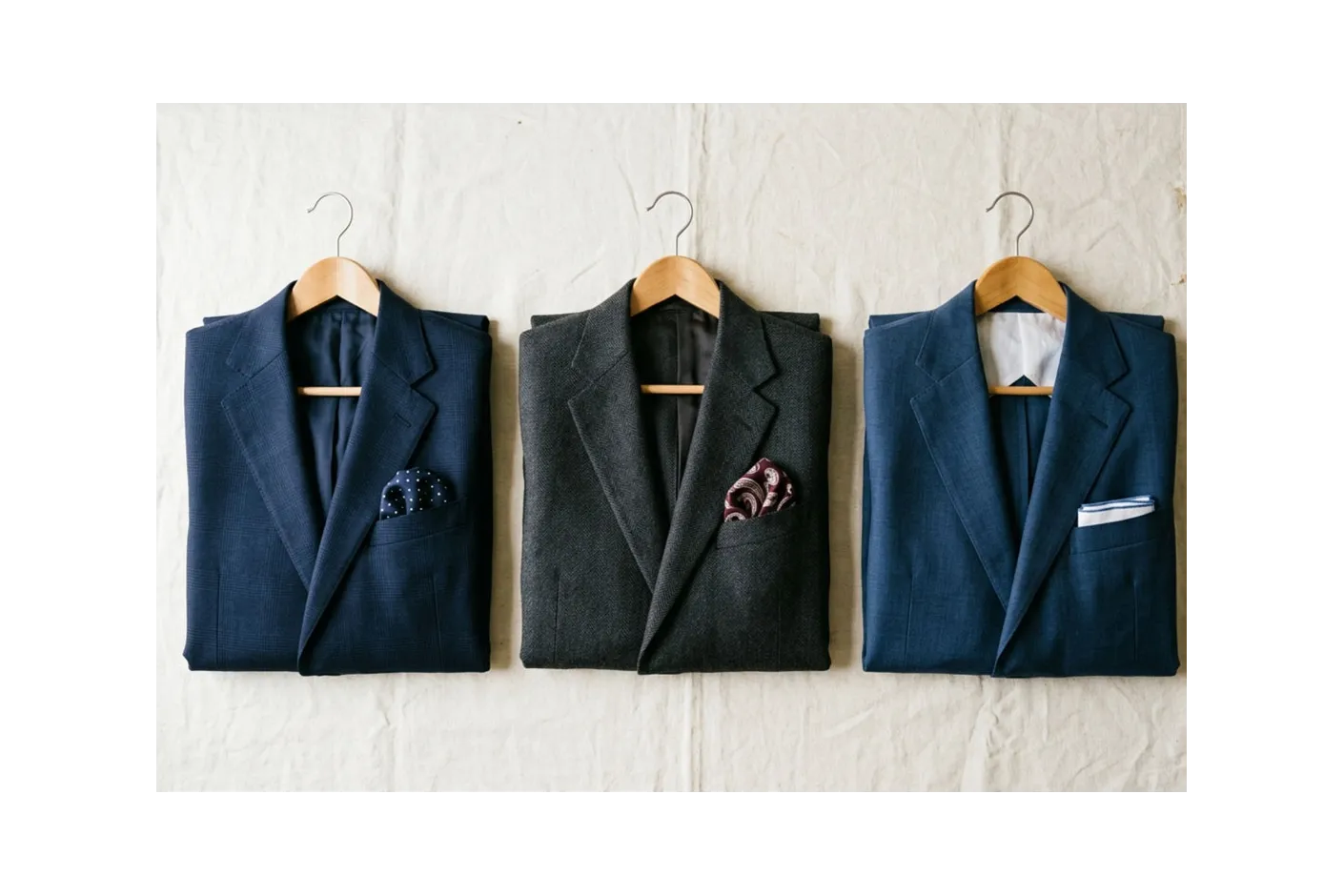
How Often Should You Replace Your Business Suits?
The lifespan of a business suit is not fixed. It is a function of three variables: the quality of the cloth it was made from, the quality of the construction, and the intelligence with which it has been worn and maintained. Get all three right, and a suit does not have a replacement date. It has a relationship — one that deepens rather than deteriorates over time.
The Industry Standard Is Not the Right Standard
Conventional menswear wisdom suggests replacing a business suit every two to three years for a suit worn frequently, every four to five for one worn occasionally. This advice is not wrong, exactly. It describes the lifespan of an average suit made from average cloth and constructed by machine to a price point.
It says nothing useful about a suit made from Super 150's or Super 160's wool, hand-sewn by master tailors, and cut to fit a specific body rather than a generic size bracket. These are different objects. Evaluating them by the same timeline is like applying the replacement schedule of a rental car to a vehicle that has been properly maintained for a decade.
The question to ask is not "how old is this suit?" The question is "what is this suit made of, and how has it been treated?"
What Actually Determines a Suit's Lifespan
The Cloth
Fabric is the single greatest determinant of longevity — and this is where the conversation around quality investment becomes entirely concrete rather than aspirational.
Fine wool at Super 150's and Super 160's grades is not simply softer than standard wool. It is structurally more resilient in ways that matter specifically to a suit worn regularly in professional contexts. The finer the fiber, the more tightly and evenly it can be woven, which means better recovery after compression — sitting, folding, traveling — and better resistance to the pilling and surface degradation that ages cheaper cloth visibly and quickly.
A suit woven from 100% fine wool Super 160's, such as our Maggiore in Blue Box Pattern, does not thin at the elbows or develop a sheen at the seat after eighteen months of regular wear. The fiber's inherent properties resist this. You are not racing against the clock in the same way.
Blended fabrics that incorporate silk or cashmere — such as the wool, silk, and cashmere combination in our Maggiore Wine and Blue Box Pattern jacket — introduce additional properties worth understanding. Silk adds tensile strength and surface resilience. Cashmere softens the hand and improves drape over time. These are not merely luxuries. They are structural contributions that extend the life and behavior of the cloth in practical, measurable ways.
The Construction
A machine-sewn suit and a hand-sewn suit age entirely differently, and this is not a matter of snobbery — it is mechanics.
In machine construction, the stitching is uniform and tight, which is initially its strength and eventually its weakness. Under the stresses of regular wear — movement, cleaning, temperature changes — machine stitching can loosen or break at points of tension in ways that are difficult to repair invisibly. The canvas, if present at all, may be fused rather than floating, which means it eventually separates from the facing fabric in a way that no dry cleaner or tailor can fully reverse.
Hand-sewn construction, as practiced in our Rome atelier, works differently. The stitching has natural give — individual stitches absorb stress rather than distributing it uniformly along a seam until something gives. A floating canvas, pad-stitched by hand to the chest piece, molds to the body of the wearer over time rather than separating from it. When repairs are needed — and in any suit worn seriously, they will eventually be needed — hand-sewn construction accepts them without betraying that anything has been done.
The practical consequence: a well-constructed hand-sewn suit does not simply last longer. It improves for the first several years of wear before plateauing at a quality that machine construction never reaches.
Rotation
This is the variable most within the wearer's control, and most consistently underestimated.
Wool fiber needs time to recover between wearings. The natural crimp that gives wool its structure — its ability to spring back, hold shape, and release wrinkles — is stressed by a full day's wear and needs approximately 24 to 48 hours to restore itself fully. A suit worn five days a week is under continuous stress. The same suit worn two or three days a week, rotating with two or three other suits of comparable quality, will outlast it by years.
This is the invisible logic behind building a considered wardrobe rather than relying on one or two suits indefinitely. The investment in a second or third exceptional suit is, in practical terms, an extension of the first suit's life. The mathematics work.
Signs That a Suit Genuinely Needs Replacing
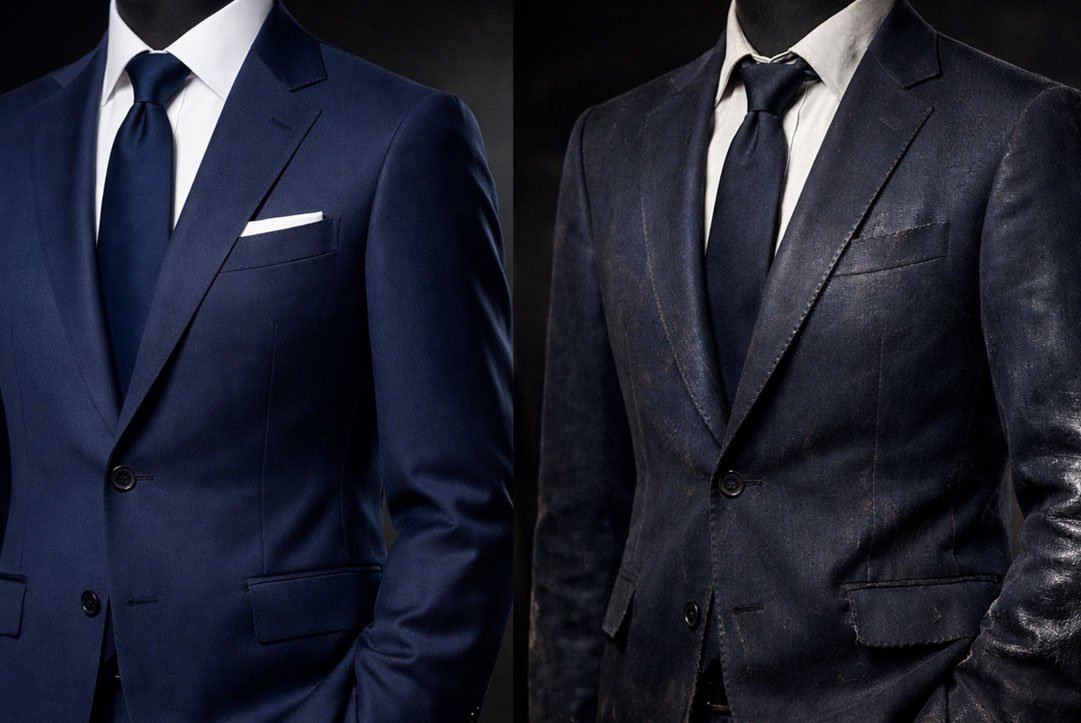
With the above context established, there are specific indications that a suit has reached the end of its useful life — signs that distinguish honest wear from a problem solvable by maintenance or tailoring.
Surface degradation that cannot be reversed. A suit develops sheen — that flat, slightly reflective surface — when the wool fibers have been abraded to the point where they no longer hold light in the same way. Light sheen, particularly at the seat or inner elbow, can sometimes be addressed by a skilled dry cleaner. Pronounced, permanent sheen indicates fiber damage that is not recoverable.
Structural failure in the chest or shoulders. If the jacket no longer lies flat across the chest, or if the shoulder line has shifted permanently from its original position, the internal structure — the canvas and padding that give a jacket its shape — has broken down. In a fused jacket, this is irreparable. In a quality hand-constructed jacket, it may be addressable by a skilled tailor, but requires honest assessment.
Irreparable fit problems. Bodies change. A suit that no longer fits across the shoulders cannot be let out; the shoulder seam is the one area where a tailor has limited options. Significant changes in the chest or waist can be accommodated to a point, but there are limits. When alteration cannot close the gap between the suit's current fit and an acceptable one, replacement is the honest answer.
Fabric thinning at high-stress points. The inner thigh of the trousers, the elbow of the jacket, the area beneath the arms — these are the zones where fabric thins first. Modest thinning can be monitored; actual wear-through at these points is a signal that the cloth has given what it had.
What does not require replacement: a loose button, a fraying buttonhole, a hem that has come undone, a lining that has torn, a minor stain. These are maintenance items, not retirement notices. A good tailor handles all of them, and the willingness to maintain a suit properly is precisely what separates a garment that lasts a decade from one that lasts three years.
The Frequency Question, Answered Honestly
For a suit made from genuinely fine cloth — Super 150's or Super 160's wool, properly woven — constructed by hand, worn on a sensible rotation of two to three times per week, and maintained with regular pressing and periodic professional cleaning:
You should not need to replace it for a minimum of seven to ten years. Many such suits, in the care of attentive owners, outlast that considerably.
For a suit at the upper end of the ready-to-wear market — good cloth, but machine-made, worn regularly — the honest lifespan is three to five years before visible deterioration begins.
For a suit at the lower end of the price spectrum, worn frequently: the conventional two-to-three-year guidance is accurate, and possibly generous.
The implication is clear, and it is not simply a matter of taste. The economics of quality tailoring favor the buyer over time. Two exceptional suits, rotated intelligently and maintained properly, will outlast six suits of modest quality — and look considerably better throughout.
Maintenance That Extends Life Significantly
Since maintenance is the variable most directly in the wearer's hands, it is worth being specific.
Brush after every wearing. A natural-bristle garment brush removes surface dust and debris before they work into the fiber. This one habit, consistently practiced, extends the interval between dry cleaning significantly — and it is dry cleaning, more than wear itself, that degrades fine wool over time.
Hang on a proper hanger. Shaped wooden hangers — wide enough to support the shoulder without distorting it — are not optional for a suit worth protecting. Wire hangers collapse the shoulder; flat hangers concentrate stress at two points on the fabric.
Allow 24 to 48 hours between wearings. As discussed above, this is structural maintenance rather than preference. Use this time to hang the suit in a space where air can circulate, allowing any moisture absorbed during the day to release.
Steam, do not iron. Direct iron contact on fine wool, even through a pressing cloth, risks damaging the fiber surface. A good steamer restores shape and releases wrinkles without contact. When pressing is genuinely necessary, always use a pressing cloth.
Dry clean infrequently. The chemicals involved in dry cleaning degrade fine wool fibers over time. For a suit brushed regularly and aired properly, once or twice per year is generally sufficient unless a specific incident requires it. Spot cleaning by a professional between full cleans is a better approach.
Store correctly during off-seasons. A breathable garment bag — never plastic, which traps moisture — and cedar elements to discourage moths, in a cool and dark environment. The enemy of fine wool in storage is moisture, heat, and moths, in roughly that order.
When Replacement Is Actually an Opportunity
There is a particular kind of gentleman who replaces a suit reluctantly, when evidence becomes undeniable. And there is another kind who understands that replacing a suit — when the time genuinely comes — is not a defeat but a decision. An opportunity to build the wardrobe differently than before.
Because the knowledge accumulated through years of wearing a well-made suit is itself valuable. You know which weight of cloth you prefer for which season. You know whether you run warm or cold. You know whether you sit in meetings for six hours or spend your days moving between environments. You know, intimately, how you need a jacket to fit across the shoulder, through the chest, through the arm.
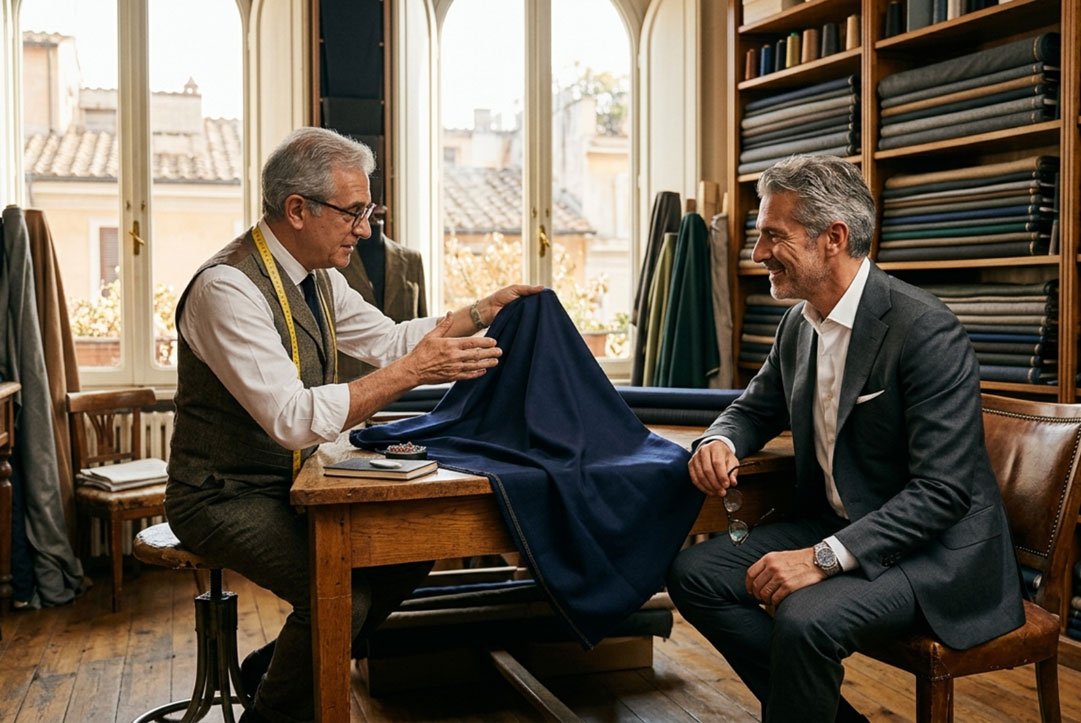
This knowledge, brought to a made-to-measure consultation, produces something that no off-the-rack purchase ever could: a suit built specifically for you, in cloth chosen for your specific needs and preferences, that begins its life already at the standard it will take a lesser suit years to approach — if it ever does.
The best time to replace a suit is when its replacement can be built rather than simply bought.
DELETTO crafts hand-sewn suits and jackets in Rome, made to measure for the discerning gentleman. To begin a consultation for your next commission, contact our atelier directly