
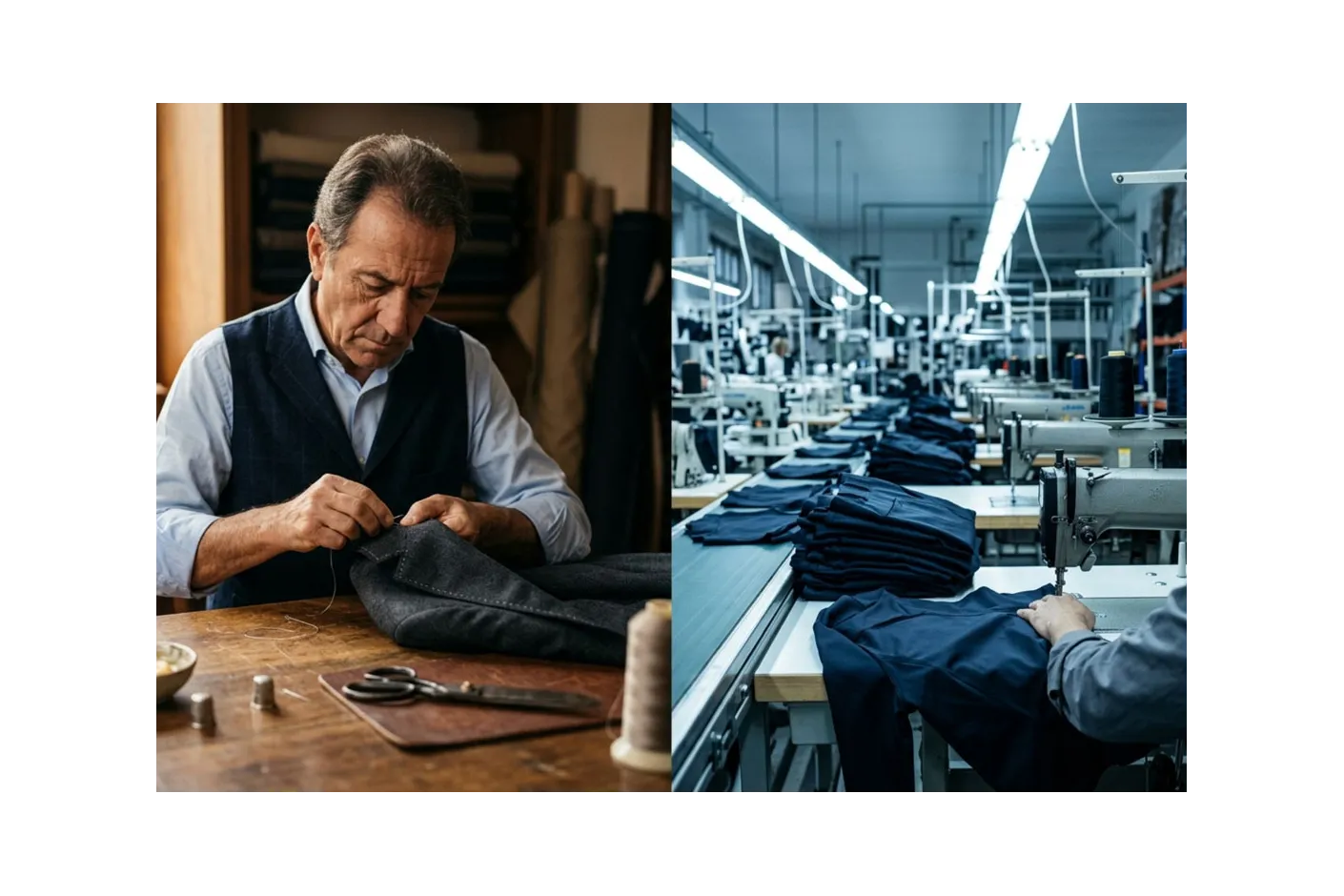
Hand-Sewn vs. Machine-Made Suits: What's Worth Your Investment?
When shopping for a quality suit, you'll eventually face a choice that isn't always visible to the naked eye: hand-sewn or machine-made. The difference affects not only the price but also how the suit fits, how long it lasts, and how it makes you feel when you wear it.
What Is a Machine-Made Suit?
Most suits sold today are machine-made. They are assembled by industrial sewing machines in large factories, often with minimal human intervention. The process is fast, efficient, and produces consistent results at scale.
Machine-made suits typically use fused construction, where a layer of adhesive bonds the outer fabric to an internal stiffener. This method is quick and inexpensive, which is why these suits are affordable and widely available.
What you get: A suit that looks decent off the rack but may not age well. The fused layers can separate over time, creating bubbles or ripples in the fabric. The shoulders and lapels often feel stiff because they rely on synthetic padding rather than natural shaping.
What Is a Hand-Sewn Suit?
A hand-sewn suit is exactly what it sounds like — a garment where skilled artisans use needle and thread to assemble each piece by hand. This is the traditional Italian method known as sartoria, and it's how the world's finest suits have been made for centuries.
DELETTO suits are hand-sewn using full canvas construction. A floating layer of horsehair or wool canvas sits between the outer fabric and the lining, with hundreds of tiny hand stitches securing it in place.
What you get: A suit that moves with your body, develops a personalized shape over time, and maintains its structure for decades. The natural materials breathe, and the hand stitching creates a soft, natural roll in the lapels that no machine can replicate.
Key Differences at a Glance
| Feature | Hand-Sewn Suit | Machine-Made Suit |
|---|---|---|
| Construction | Full canvas, floating chest piece | Fused, glued layers |
| Shoulders | Soft, natural padding | Stiff, structured padding |
| Lapels | Soft roll, hand-stitched edges | Flat, machine-pressed edges |
| Durability | Decades with proper care | 2-5 years before signs of wear |
| Fit | Conforms to your body over time | Fixed shape, no adaptation |
| Repairability | Easily altered by any tailor | Difficult to alter without damage |
| Price | Higher initial investment | Lower upfront cost |
Are Hand-Sewn Suits Worth It?
This is the question most men ask when comparing custom suit prices. The honest answer depends on how you plan to use the suit.
Hand-sewn suits are worth it if:
- You wear suits regularly for work or important events
- You expect a suit to last 10+ years
- You value the way clothing feels against your body
- You notice and appreciate fine details
- You want a suit that improves with age, like good leather
A machine-made suit may be fine if:
- You need a suit for a one-time occasion (wedding, prom)
- You wear a suit only once or twice per year
- Budget is your primary constraint
- You don't expect to alter or maintain the suit long-term
For the professional who wears suits weekly, the hand-sewn option is almost always the better investment. The higher upfront custom suit price translates to a lower cost per wear over the life of the garment.
Understanding Custom Suit Prices
Why do hand-sewn suits cost more? Let's break down what you're paying for.
| Cost Factor | Hand-Sewn Suit | Machine-Made Suit |
|---|---|---|
| Labor time | 40-60 hours of artisan work | 2-4 hours of machine work |
| Materials | Premium wool, horsehair canvas, silk linings | Synthetic blends, fused interlinings |
| Skill level | Years of apprenticeship required | Basic machine training |
| Production scale | Small batches, made to order | Mass production, thousands of units |
A typical custom suit from a quality maker ranges from $2,000 to $6,000. A hand-sewn, full canvas suit at the higher end will outlast three or four machine-made suits costing $500 each — and you'll look better wearing it.
How to Tell the Difference
Before you invest, here are three quick tests:
The pinch test: Pinch the fabric on the chest. If you feel a third layer floating inside, that's the canvas. If only two layers, it's likely fused.
The lapel roll: A hand-sewn suit has a lapel that rolls softly. A machine-made suit looks flat and stiff.
The button test: Hand-sewn buttons have a small "stem" of thread that lifts them slightly, allowing for movement.
The DELETTO Difference
Every suit is hand-sewn by master artisans using traditional Neapolitan techniques passed down through generations. We use full canvas construction, premium fabrics from mills like Scabal, Loro Piana, Dormeuil, and Drago, and we spend 40+ hours on each garment.
Our specialty is lightweight fabrics for warm climates, making our suits ideal for travel and year-round wear in places like Dubai, Miami, and Southeast Asia. Each suit is made to your measurements and can be adjusted throughout its life as your body changes.
Ready to experience the difference of a hand-sewn Italian suit? DELETTO Milano creates bespoke suits tailored to your measurements using traditional full canvas construction. Contact us to schedule a private consultation at our Milan atelier or at one of our US ateliers.